
Laser cutting in shipbuilding
Precision cutting and beveling for marine steel structures
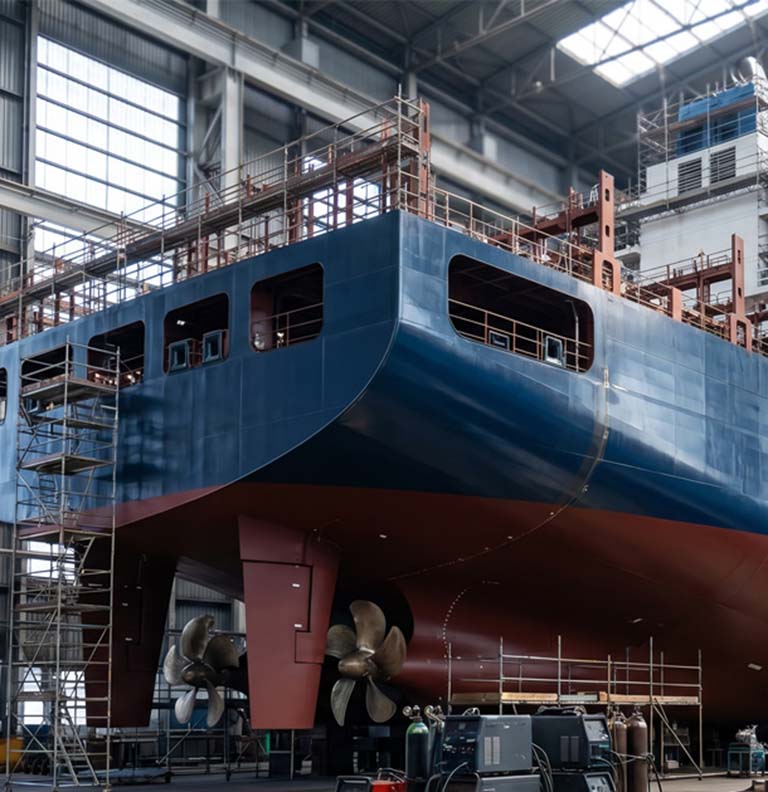
In shipbuilding, the quality of prefabrication determines the speed, fit, and cost-effectiveness of the entire production process. Large steel plates, thick sheets, profiles, and sections must be reliably cut to size, prepared, and transferred to downstream processes—often under significant time and cost pressure.
Laser cutting offers clear advantages here: clean cut edges, high dimensional accuracy, and reproducible contours. Components for ship hulls, decks, tanks, sections, and offshore components can be precisely prepared and processed more quickly.
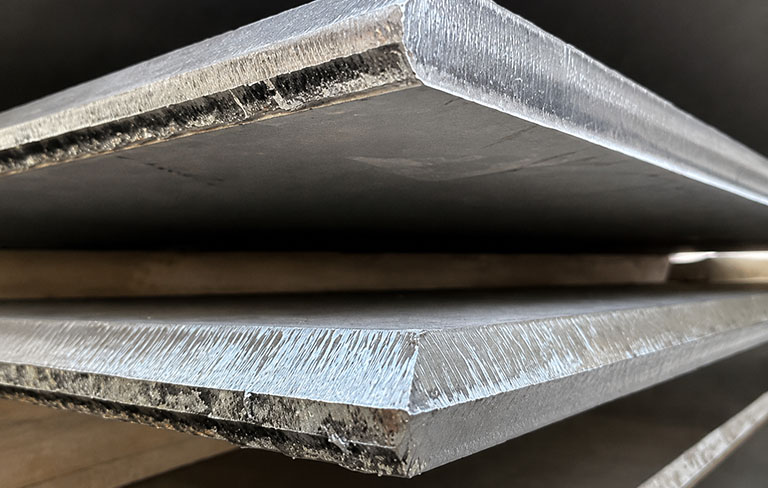
Bevel cutting is particularly important for weld preparation. Defined bevels—for example, for K-seams—ensure that component edges are directly prepared for downstream welding processes. This can significantly reduce manufacturing costs, especially when working with thick structural steel plates.
Precitec cutting heads and sensor solutions support stable laser cutting processes in industrial manufacturing environments—even for large components, complex contours, and material thicknesses ranging from approximately 18 to 30 mm.
Advantages of laser cutting in shipbuilding
In shipbuilding, laser cutting is not just about the precise cutting of individual components. What matters most is how well the cut sheets, profiles, and sections fit into the rest of the manufacturing process. Clean cut edges, defined chamfers, and consistent quality reduce rework, facilitate welding, and improve production planning.
- Less rework thanks to clean cut edges
- Components ready for welding thanks to precise fibers
- High dimensional accuracy in large steel structures
- Reliable machining of thick structural steel plates
- Reduced manufacturing effort thanks to integrated edge preparation and fewer process steps
Precise cutting, pre-finished edges
In marine manufacturing, every consistent process step counts. The more precisely sheet metal and steel plates are cut, the easier they are to assemble, position, and weld. Laser cutting combines cutting and edge preparation into a single process, thereby creating a reliable foundation for further manufacturing.
This is particularly important for large-format components, where even small deviations can lead to high follow-up costs later on. Precise bevel cuts facilitate weld preparation, improve fit accuracy, and reduce the need for manual corrections.
Typical applications
Ship hulls and sections
Precisely cut sheet metal and steel plates for large-format components with high dimensional accuracy.
Decks, tanks, and structural components
Clean cut edges and pre-machined chamfers facilitate assembly, positioning, and further processing.
Offshore components
Reliable cutting processes for maritime steel structures with high requirements for quality, robustness, and process reliability.
K-seam preparation
Bevel cutting produces component edges ready for welding and reduces the need for manual rework prior to welding.
Tailored solutions for shipbuilding
Precitec cutting heads support precise and stable cutting processes for a variety of material thicknesses and component geometries. Combined with reliable sensor technology, they deliver reproducible cut quality and prepare component edges for direct further processing.
The ProCutter 2.0 supports demanding laser cutting processes in shipbuilding—with laser power up to 85 kW—ranging from precise blanking to bevel cutting for weld-ready component edges.
FAQ: Laser cutting in shipbuilding
Laser cutting enables precise cuts, clean cut edges, and less rework. Components can be efficiently prepared for downstream processes.
In bevel cutting, component edges are cut at defined angles. In shipbuilding, this is often used to prepare K-seams for subsequent welding processes.
A precisely prepared K-seam facilitates subsequent welding and reduces the need for manual rework on thick sheets.
Typical applications involve sheet metal thicknesses of about 18 to 30 mm, for example with 45° bevel angles.