3D printing with metal and laser - additive manufacturing for industrial applications
What is 3D printing with metal and laser?
3D printing with metal and lasers is one of the most important technologies in additive manufacturing. The process opens up new possibilities for the industrial production of complex components. Especially for large structures, repairs or hybrid production, additive construction offers decisive advantages over conventional manufacturing processes.
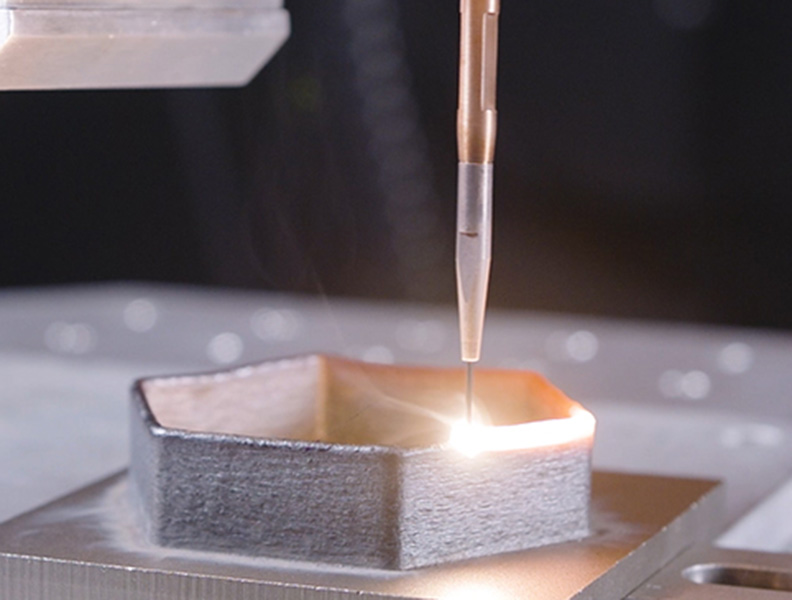
A key technology in this area is laser cladding, which is also known internationally as laser cladding, directed energy deposition (DED) or laser metal deposition (LMD). In this process, metallic filler material - either as wire or powder - is introduced into a molten pool generated by the laser and forms a new layer of material after solidification.
In the field of directed energy deposition, a distinction is also made as to the form in which the material is fed. This is referred to as:
- DED-Wire (DED-W) - wire-based additive manufacturing
- DED-Powder (DED-P) - powder-based additive manufacturing
In contrast to powder bed-based additive processes, metallic 3D printing with lasers is particularly suitable for large components, high build rates and hybrid processes involving additive manufacturing and mechanical processing.
How does metallic 3D printing with lasers work?
In additive manufacturing with lasers, additional material - usually wire or powder - is continuously introduced into a laser melt pool. The focused laser beam melts the material locally, causing the additional material to metallurgically bond with the base material.
By repeatedly applying the material, a three-dimensional structure is created step by step.
The process enables a high degree of flexibility in the production of metal components and is used for applications such as
- Prototype production
- Repair and re-manufacturing
- Production of complex metal structures
- Hybrid production with CNC machining (hybrid manufacturing)
Further information on the underlying process can be found on our laser metal deposition page.
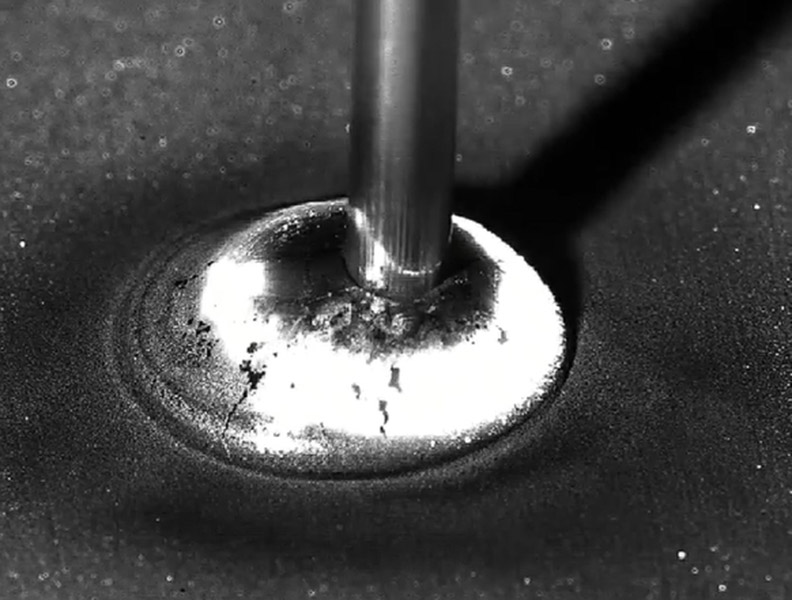
Video: Discover 3D printing with metal and laser
Why is wire-based laser metal deposition particularly suitable for 3D printing?
In wire-based additive manufacturing, metal wire is continuously fed into the laser melt pool. This process is characterized by a particularly high level of material efficiency, as the wire is completely integrated into the process.
Additive manufacturing processes using wire enable nearly 100% material utilization. Among the most important advantages are:
- high build-up rates
- high material efficiency
- simple material handling
- low material losses
- stable layer formation
This makes wire-based laser metal deposition particularly suitable for the production of larger metallic structures or for applications with high material deposition.
How does a coaxial wire feed ensure stable additive manufacturing processes?
Precise and reproducible material feed is crucial for stable additive manufacturing processes.
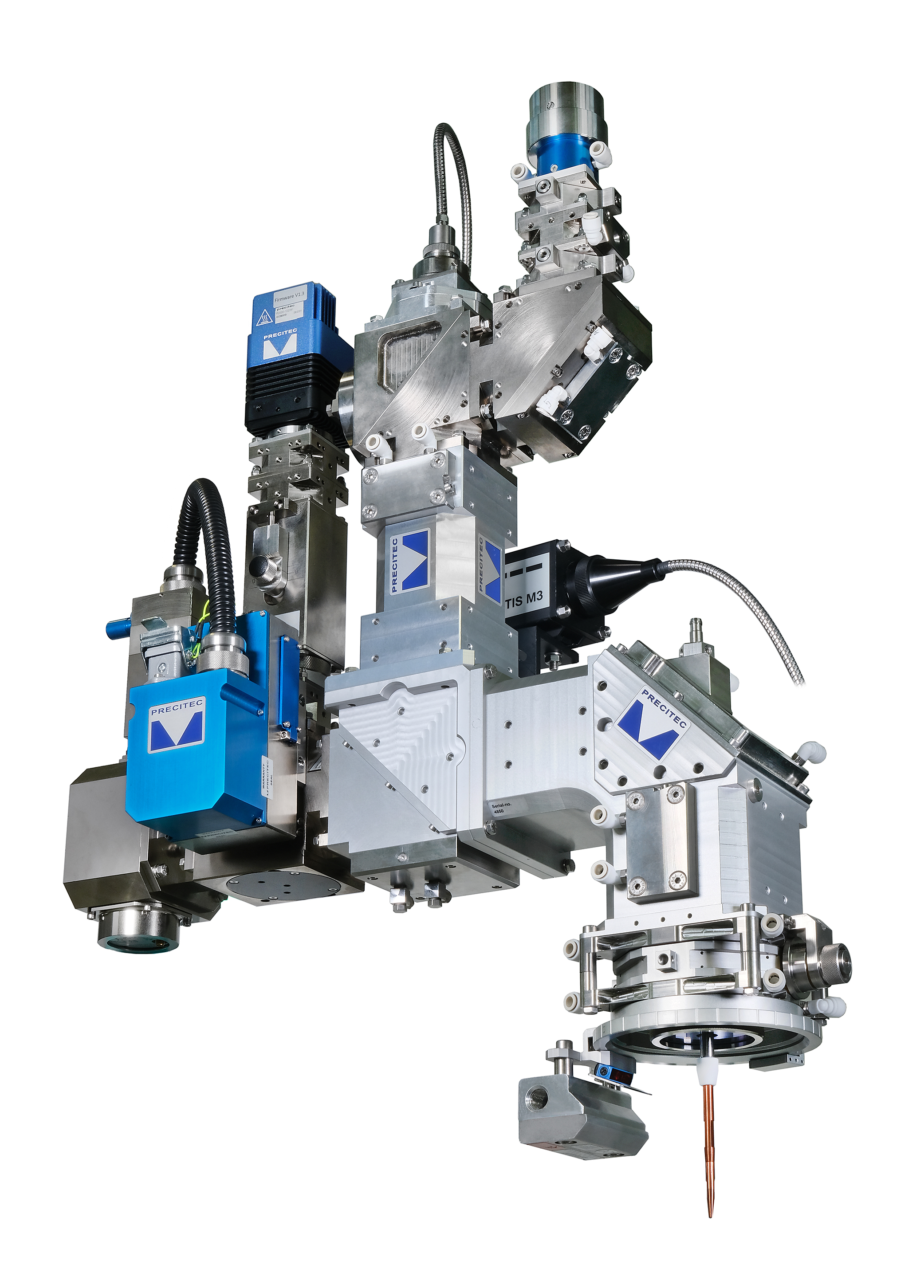
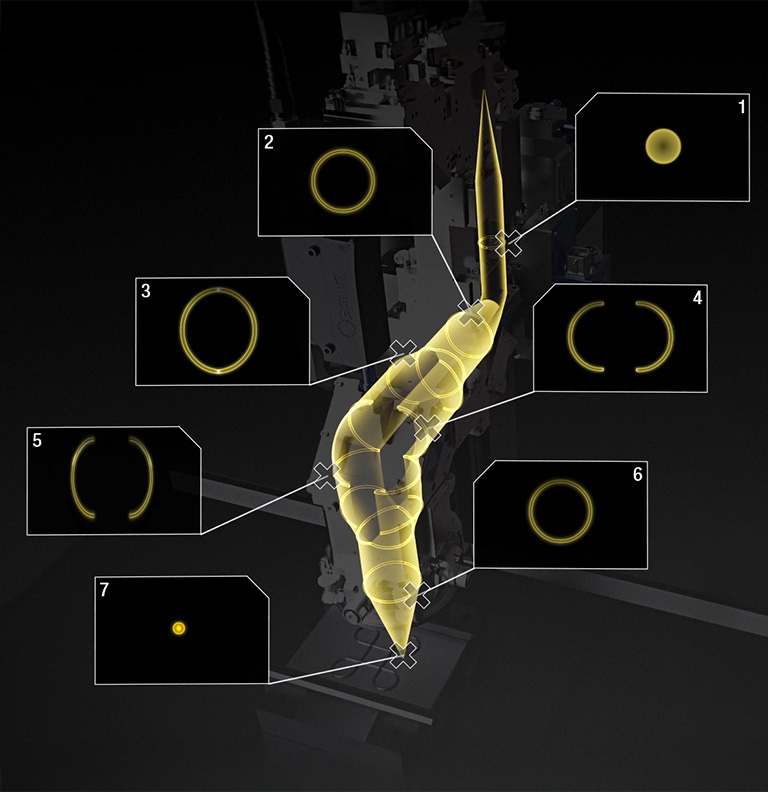
With the CoaxPrinter , Precitec offers a processing head for wire-based laser deposition welding in which the wire is fed coaxially to the laser beam. This allows the wire to be fed evenly into the weld pool regardless of the direction of movement of the process.
The coaxial wire feed enables stable layer formation and uniform material deposition, even with complex movement paths. As a result, high-quality component structures and almost pore-free layers with high process stability can be produced.
What applications is laser additive manufacturing used for?
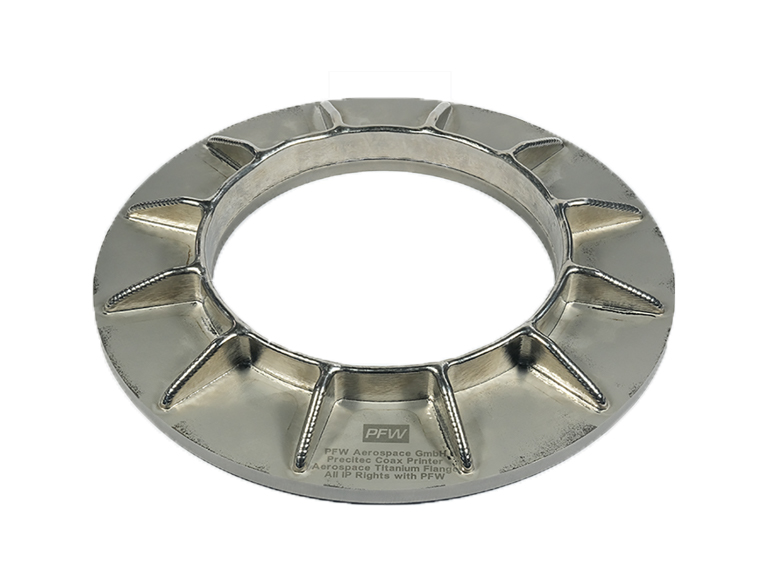
Laser additive manufacturing is primarily used to produce complex metal components, repair high-value parts and apply functional coatings. DED and LMD processes enable metal material in the form of wire or powder to be deposited precisely onto an existing component or built up layer by layer to create a new geometry.
Typical applications include:
- Production of prototypes and complex metal components
- Repair and refurbishment of high-value parts
- Addition of functional structures to existing components
- Surface coating and wear protection
- Production of large metal components
- Hybrid manufacturing combined with CNC machining
These processes are used particularly in aerospace, automotive manufacturing, energy production, turbine technology and mechanical engineering.
In which industries is laser 3D printing used?
Additive manufacturing with lasers is used in numerous industries today. The technology offers major advantages, particularly where complex metal components are required or existing components need to be functionally enhanced.
Typical areas of application are
- Aerospace
- Energy and turbine technology
- Automotive industry
- Mechanical engineering
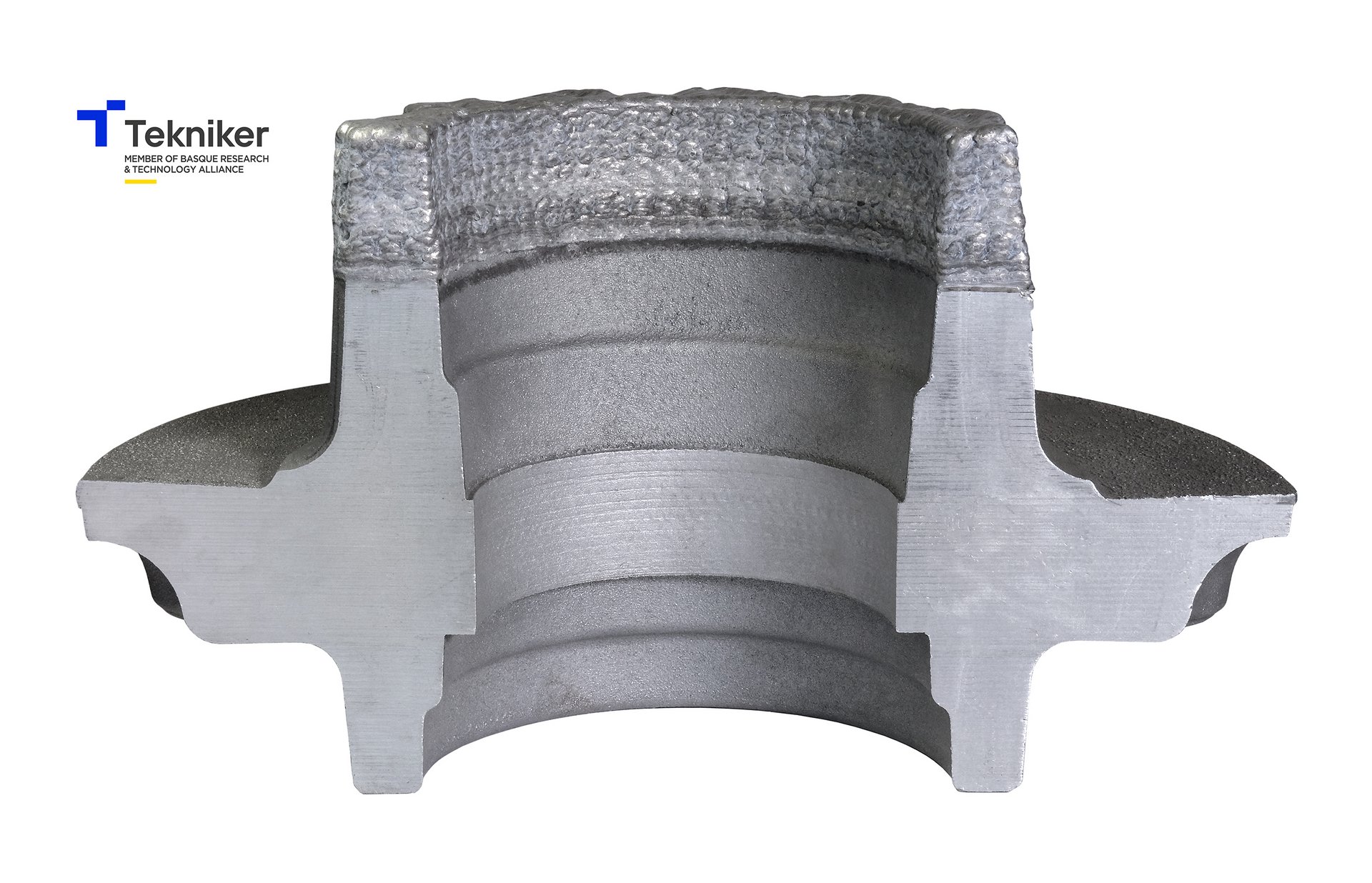
Another important application is the functional expansion of existing components, in which additional structures are specifically built onto a basic body.
Additive manufacturing with lasers thus enables new design freedom, reduces material consumption and opens up new possibilities for hybrid production and repair processes.