
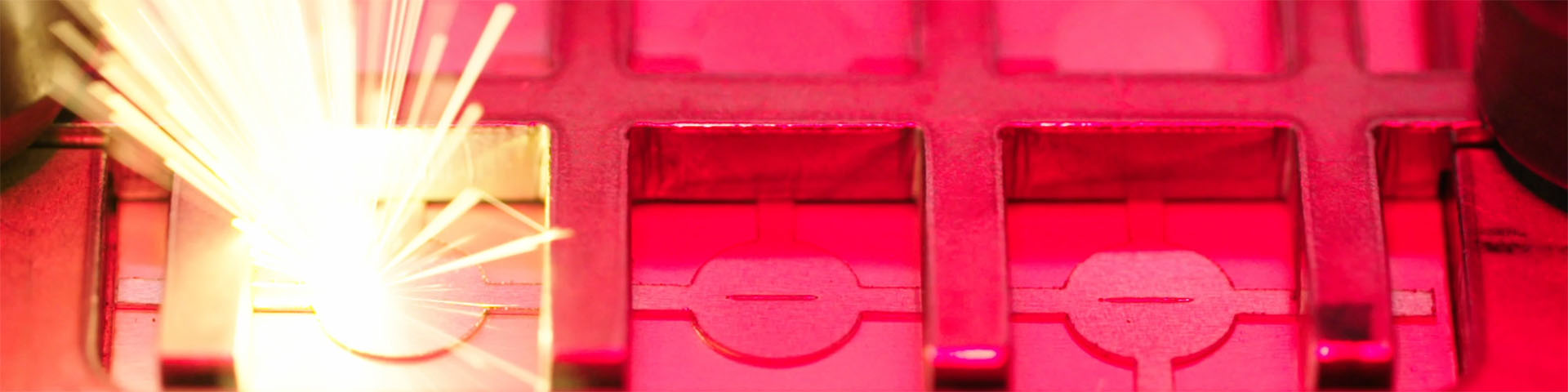
ScanMaster Plus - system for highly dynamic scanner welding and remote laser welding
Precise beam positioning, AI-supported component recognition and stable laser welding processes in one system
The ScanMaster Plus is a solution for highly productive scanner welding or remote laser welding in industrial series production. A new scanner technology with optimized path planning ensures particularly high figure and speed accuracy - even with complex welding contours and high processing speeds.
The combination of highly dynamic beam guidance, precise sensor technology and integrated process monitoring during laser welding enables fast, reproducible and stable processes.
A coaxial camera with AI-supported image processing recognizes the component position directly in the working field and positions the laser beam precisely at the desired welding position. In addition, high-precision distance measurement using OCT and autofocus ensures that the focus point is kept stable even in the event of component tolerances or position deviations.
In addition, component surfaces can be specifically cleaned with the laser before welding. This further improves process stability and seam quality - especially with challenging materials or varying surface conditions.
The ScanMaster Plus combines beam guidance, sensor technology and process monitoring in one integrated solution. Camera images, OCT data and signals from the Laser Welding Monitor LWM are combined on one system and evaluated in real time. This enables consistent, precise process monitoring and ensures greater process reliability and reproducible welding quality - for example in battery production, power electronics or car body construction.
Find out more in the video on remote laser welding with the ScanMaster Plus:
What advantages does the ScanMaster Plus offer for scanner welding?
AI-supported component recognition for precise beam positioning
Precise positioning of the laser beam is crucial for stable laser welding processes. The ScanMaster Plus uses a coaxial camera with AI-supported image processing to detect the component position directly in the working field and place the laser beam exactly at the desired welding position. Position detection is almost cycle time-neutral across the entire scan field. Component tolerances or position deviations can be automatically compensated for. As a result, scanner welding processes can be implemented reproducibly and reliably - even with complex component geometries.

Higher productivity thanks to dynamic remote laser welding
In scanner welding, the laser beam is positioned in the working field using highly dynamic mirrors. The ScanMaster Plus uses a new scanner technology with optimized path planning, which enables particularly high figure and speed accuracy. Even complex welding contours can be implemented at consistently high speeds. This reduces cycle times and significantly increases the productivity of remote laser welding systems.

Integrated sensor technology for stable processes and quality assurance
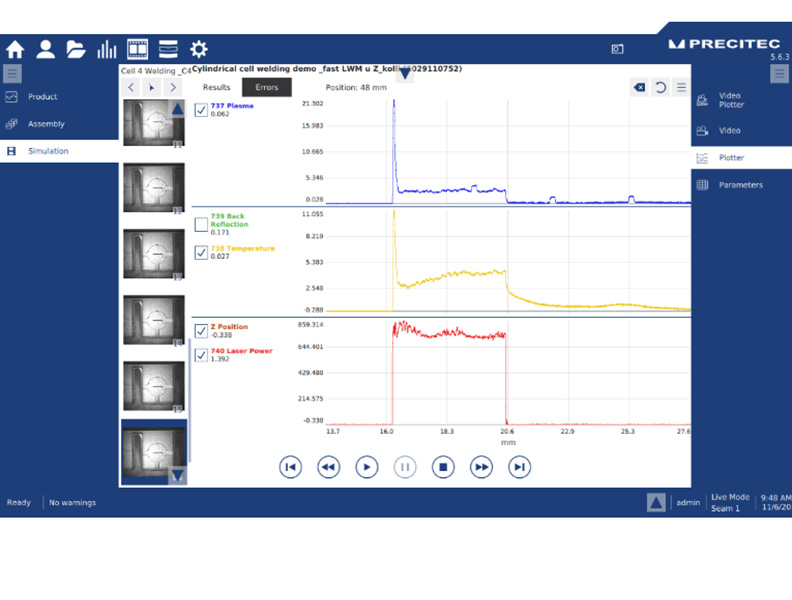
The ScanMaster Plus combines beam guidance, sensor technology and process monitoring in one system. High-precision distance measurement with autofocus, integrated image processing and process monitoring enable continuous control of the welding process. Deviations due to component tolerances, material fluctuations or process instabilities can be detected at an early stage. Applications benefit from stable processes, reduced rework and reliable quality assurance in series production.
ScanMaster and ScanMaster Plus at a glance
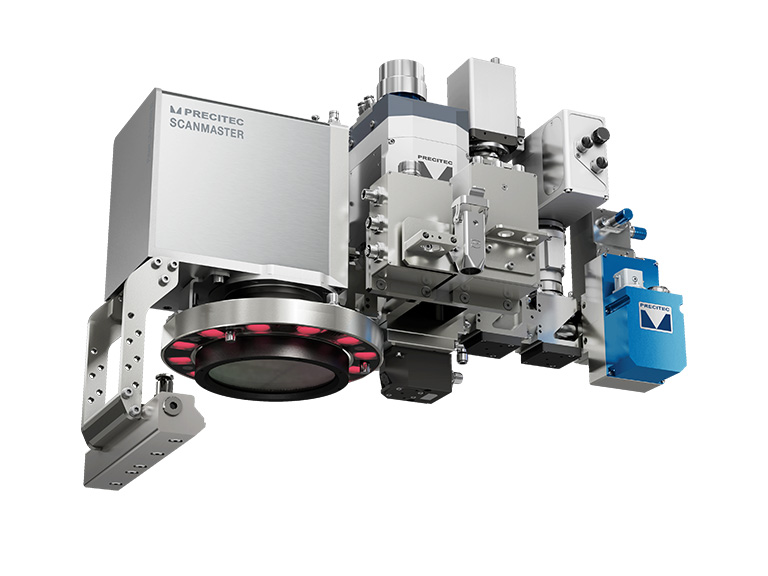
The ScanMaster has been a proven solution for scanner welding and remote laser welding in industrial production for many years. The system combines scanner optics, distance measurement, image processing and process monitoring in an integrated solution and enables precise and reproducible laser welding processes.
The ScanMaster Plus builds on this proven concept and adds a new scanner platform with optimized path planning and higher dynamics. This means that welding paths can be implemented precisely even at high processing speeds, resulting in significant cycle time benefits. In addition, the ScanMaster Plus enables new functions such as targeted laser cleaning of component surfaces before welding, which can further improve process stability and seam quality.
Technology for highly dynamic scanner welding
The ScanMaster Plus is based on powerful scanner technology for precise and highly dynamic beam guidance during scanner welding. The laser beam is positioned within the working field via a galvanometer scanner system and can therefore switch very quickly between different welding positions.
Thanks to optimized path planning, the ScanMaster Plus achieves a particularly high level of figure and speed accuracy during beam guidance. Intelligent overshoot compensation ensures that the laser beam follows the programmed welding contour exactly, even when changing direction quickly. This allows complex welding geometries to be implemented at consistently high speeds.
A further advantage of dynamic beam guidance is the ability to integrate additional process steps directly into the processing sequence. For example, component surfaces can be specifically processed with the laser before welding and cleaned of impurities or oxide layers. This improves process stability and contributes to the high quality of the welded joint.
In combination with integrated sensors such as image processing, distance measurement and process monitoring, the result is a powerful system for remote laser welding in industrial series production. The precise beam guidance and high dynamics enable efficient processing of components with many welding points or complex seam profiles.
Applications for scanner welding
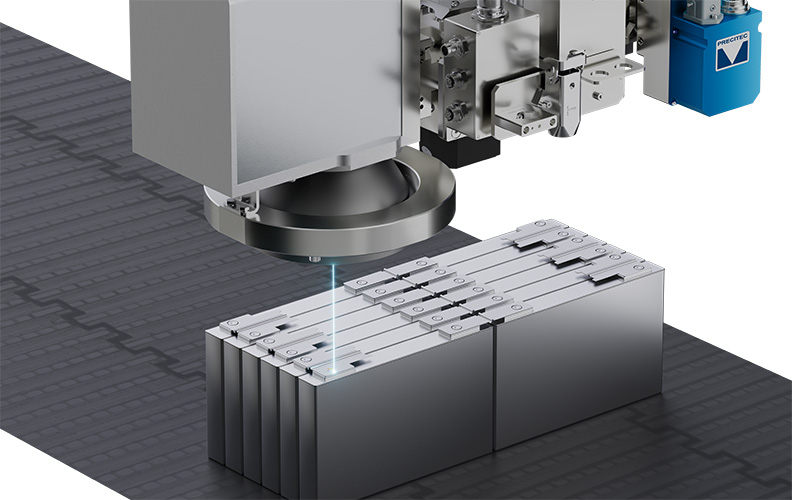
The ScanMaster Plus is ideal for remote laser welding applications with many spot welds or short seams where speed and precise beam guidance are crucial.
E-mobility and battery production
In the production of battery cells and modules, numerous precise welded joints must be reliably implemented, such as busbars, cell connectors or hairpins. The highly dynamic beam guidance enables fast, reproducible processes, while the integrated sensor technology ensures stable series production and consistently high quality.
Automotive and body-in-white
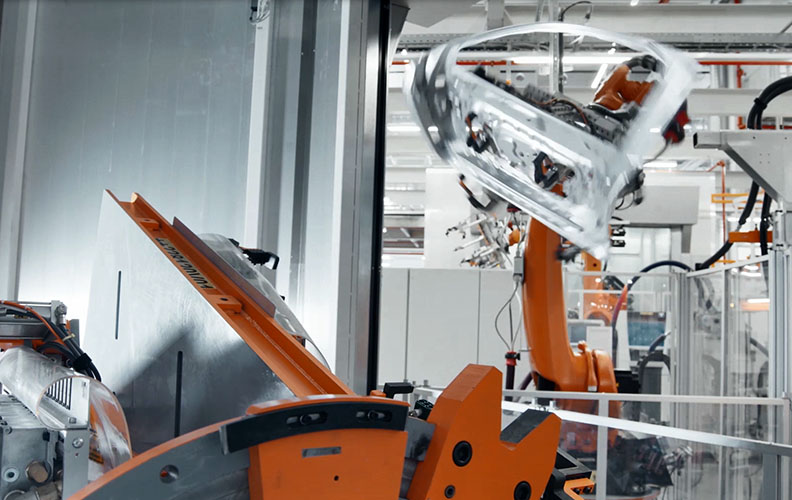
Scanner welding is used in car body construction to produce spot welds and short seams quickly and flexibly. Several welding positions can be reached within the working field without moving the welding head. This allows cycle times to be reduced and production systems to be operated efficiently - a decisive advantage for automated production lines in the automotive sector.
Electronics and power electronics
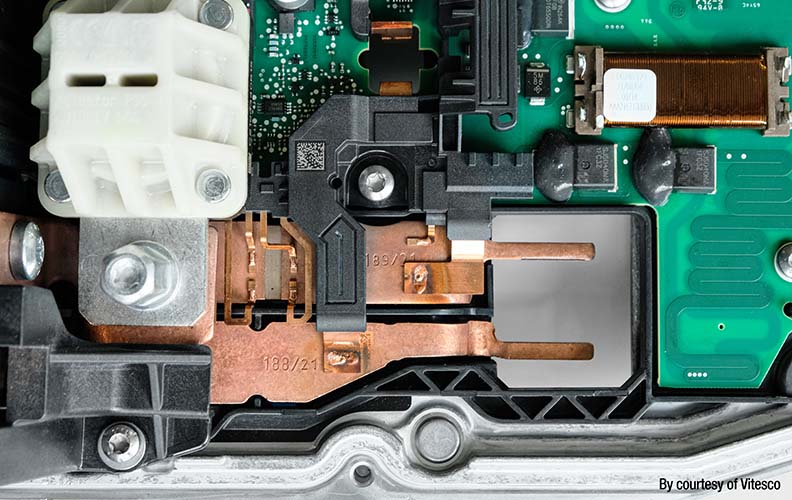
Precise and reproducible processes are crucial when welding electrical contacts, power electronics or thin-walled metal connections. Accurate beam positioning and stable focus guidance enable reliable welded joints, even with small components or challenging material combinations.
Technical data
- Compatibility: all IR fiber lasers
- max. laser power: 8 kW
- High-precision component measurement: <10 ms
- 2.5D scanner F-Theta scanner with autofocus
- Focal lengths: F255, F340, F460
- Dimensions: 600 x 220 x 500 mm
- Weight: approx. 25 kg
We need your consent to load the form!
We use Marketing Cloud Account Engagement (Pardot) Forms to embed content that may collect data about your activity. Please review the details and click in the Pardot box to accept the service and see the content. If the form is not displayed correctly, please click once more on Download the data sheet now.
Do you still have any questions or would you like an offer? Then contact us!


How does scanner welding work and what advantages does it offer?
Why scanner welding?
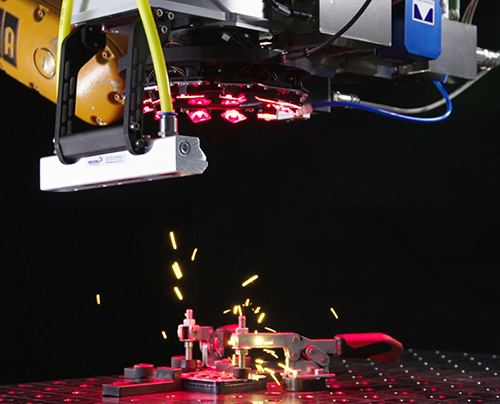
Scanner welding - also known as remote laser welding - enables particularly fast and flexible positioning of the laser beam on the workpiece. Instead of moving the welding head mechanically, the laser beam is guided within the working field using highly dynamic mirrors.
This allows spot welds and short seams to be approached very quickly within a large processing field. Cycle times can be reduced and production processes made more efficient, especially for components with many welded joints or complex geometries.
Scanner welding is therefore used in many industrial applications, for example in automotive production, battery production or electronic components.
Advantages of scanner welding
High process speed
The dynamic beam guidance enables very fast positioning of the laser beam within the working field. This reduces cycle times and increases the productivity of laser welding systems.
High flexibility for complex components
Even complex component geometries with many welding points or short seams can be processed efficiently. The laser beam is positioned flexibly across the entire scan field.
Reduced mechanical movement
As the laser beam is moved via mirrors, fewer mechanical axes need to be moved. This simplifies system concepts and reduces wear.
Ideal for automated series production
Scanner welding is particularly suitable for automated production lines. The fast positioning of the laser beam enables stable processes and high quantities.