
Laser cladding with wire – How wire-based laser cladding works and its advantages
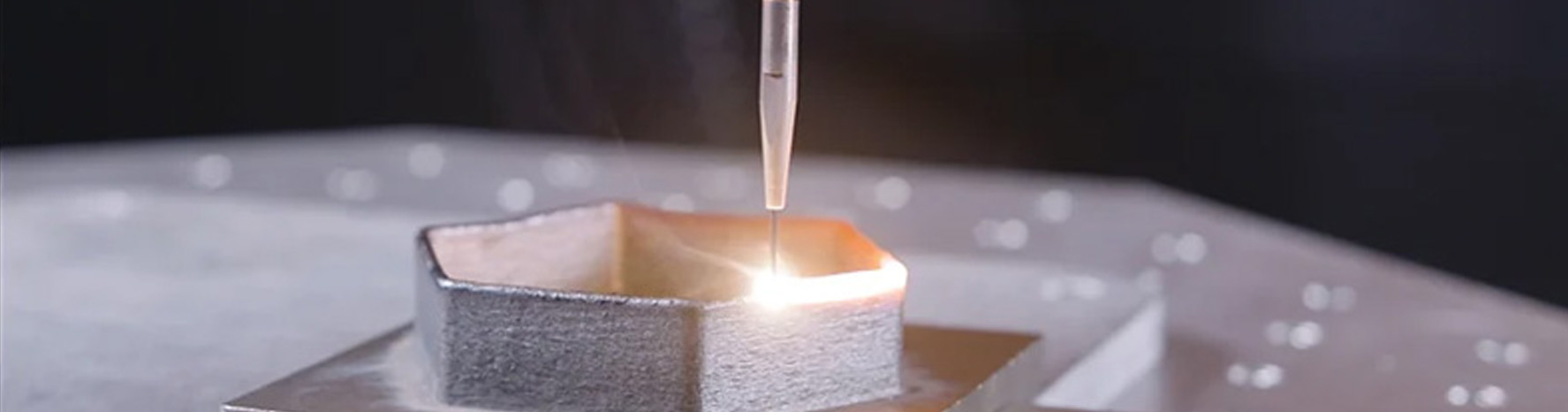
Laser wire cladding is a promising technology for manufacturing high-quality components, repairing worn components, and applying functional coatings to metal surfaces. It is an additive manufacturing process in which a metal wire is fed into a laser melt pool. Internationally, the process is also known as wire-based laser cladding or laser metal deposition with wire (LMD-W).
In wire-based laser cladding, a focused laser beam is used to melt the filler material in the form of a metal wire and deposit it precisely on the component surface. This creates a layer that is metallurgically bonded to the base material. The process enables high deposition rates and very good layer quality with a low risk of distortion.
Another advantage of laser deposition welding with wire is the efficient use of material. Compared to powder-based processes, the filler material can be fed in with virtually no loss. At the same time, complex geometries can be built up and functional layers can be created, for example to protect against wear or to specifically adjust component properties.
Omnidirectional Laser Cladding
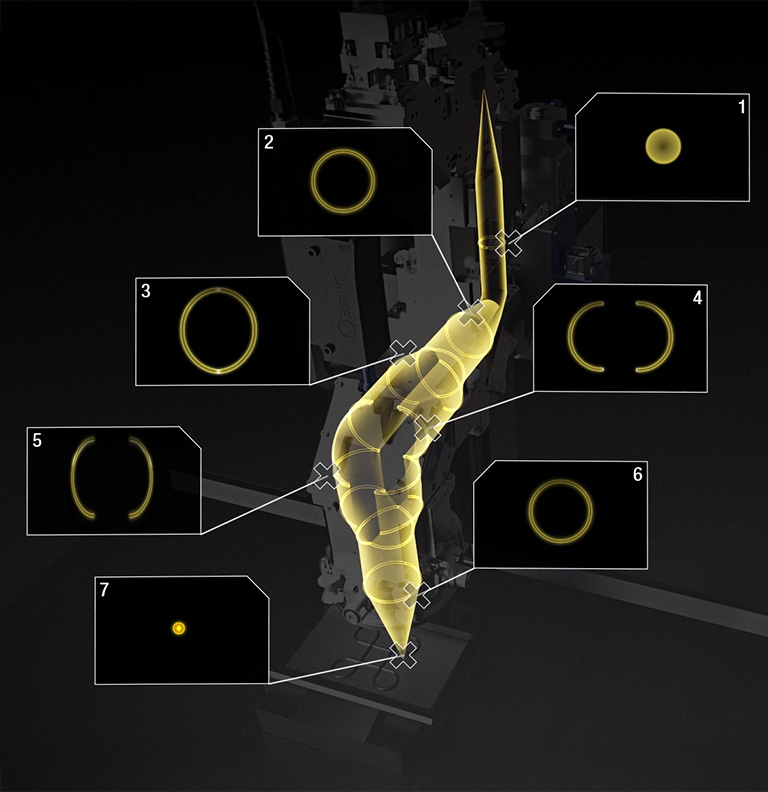
With the patented "Ring Shape Beam" technology, omnidirectional cladding becomes possible, providing a significant advantage for customers by making complex manufacturing tasks far more efficient and cost-effective. This unique beam shaping approach delivers a fully homogeneous laser intensity distribution by feeding the wire coaxially into the processing head, ensuring uniform and omnidirectional deposition.
But how exactly does the "Ring Shape Beam" work?
In this process, the laser beam is leaded (1), expanded into a ring shape at the front of the processing head (2, 3) and then split into two half-moon shapes using prisms (4). The wire is fed coaxially to the laser beam (5), and the beam profile is closed again (6). The beam is then focused into a closed laser spot, where the wire is melted (7).
This innovative method significantly boosts the application of wire-based Laser Metal Deposition (LMD), delivering exceptional build results with consistent quality and a homogeneous internal structure of the melted wire. The wire-based process also eliminates contamination of surrounding areas or surfaces.
Key Aspects and Advantages of the Ring Shape Beam Solution
- Omnidirectional intensity distribution
- Homogeneous preheating
- Minimal material distortion due to reduced heat input
The coaxial wire feed ensures 100% material utilization. In many cases, wire is a more cost-effective alternative to powder-based materials. Depending on the material and wire diameter, deposition rates of up to 4 kg/h can be achieved. This makes the process ideal for efficient, clean, and environmentally friendly 3D printing and surface coating applications.