
Laser welding in the automotive industry
Reliable laser welding processes for automotive bodywork, e-mobility, and powertrains
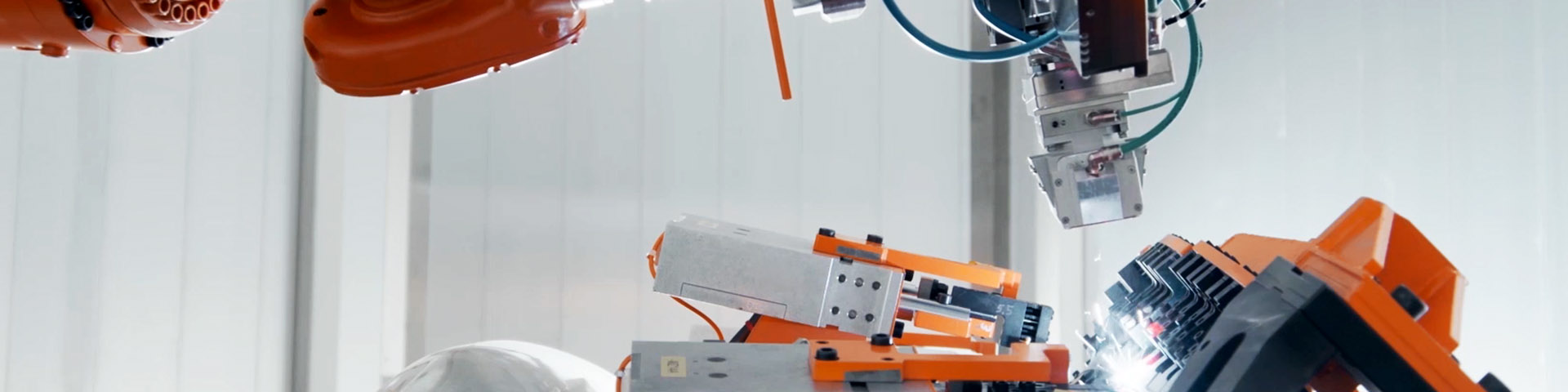
Laser welding in the automotive industry is a key process for cost-effective, flexible, and quality-assured mass production. Whether it’s body panels, aluminum add-on parts, battery components, hairpins, seat structures, or powertrain components—wherever high production volumes, short cycle times, and reproducible quality are required, the laser offers decisive advantages.
Precitec supports automotive manufacturers and equipment builders not only with high-performance welding optics, but above all with intelligent process control and in-line quality assurance. Seam guidance, beam guidance, penetration depth measurement, process monitoring, and AI-supported quality assessment can be integrated directly into automated production lines.
This results in a stable laser welding process in which every weld can be monitored, evaluated, and documented—for greater process reliability, less scrap, and seamless traceability in series production.
AI-based process monitoring for laser welding in the automotive industry
In automotive manufacturing, it is not enough to inspect welds only after the process is complete. It is crucial to detect deviations during the laser welding process, maintain process stability, and document quality data for each component in a traceable manner.
AI-powered process monitoring helps applications evaluate process-relevant signals inline and without affecting cycle time. This allows quality deviations to be detected more quickly, defects to be classified automatically, and the physical properties of the weld to be better predicted. This results in greater transparency regarding actual process and weld quality—directly during ongoing series production.
For automotive manufacturers and equipment builders, this means: less scrap, less manual inspection effort, more stable processes, and better traceability of every single weld. Especially in safety-critical applications—such as battery production, hairpin welding, body and structural components, or the powertrain—process monitoring becomes a key component for reproducible quality.
More than just a visual inspection: understanding process data and ensuring quality
Precitec solutions monitor the laser welding process right where quality is created—directly within the process. Rather than simply performing a visual inspection of the finished weld, the system intelligently correlates process signals, weld position, penetration depth, and quality data.
This enables an objective evaluation of every single weld and helps to detect typical causes of defects—such as gaps, focus deviations, power fluctuations, contaminants, or unstable process conditions—at an early stage. As a result, automotive manufacturers can reduce scrap, minimize inspection efforts, and ensure robust production processes for high-volume production.
Tailored Solutions for the Automotive Industry
Precitec solutions support stable laser welding processes in automated automotive mass production—from precise seam guidance and inline process monitoring to AI-based quality assessment. This allows welds to be monitored during the process, objectively evaluated, and documented in a traceable manner for each component.
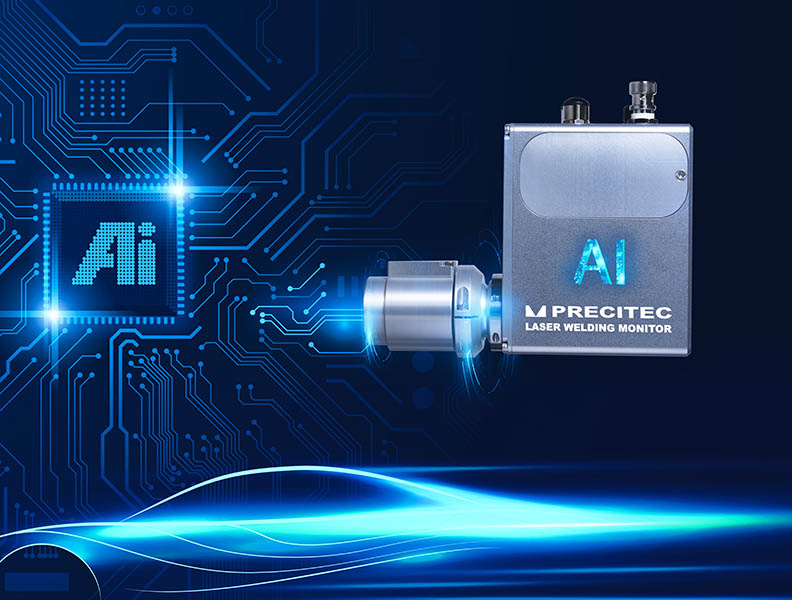
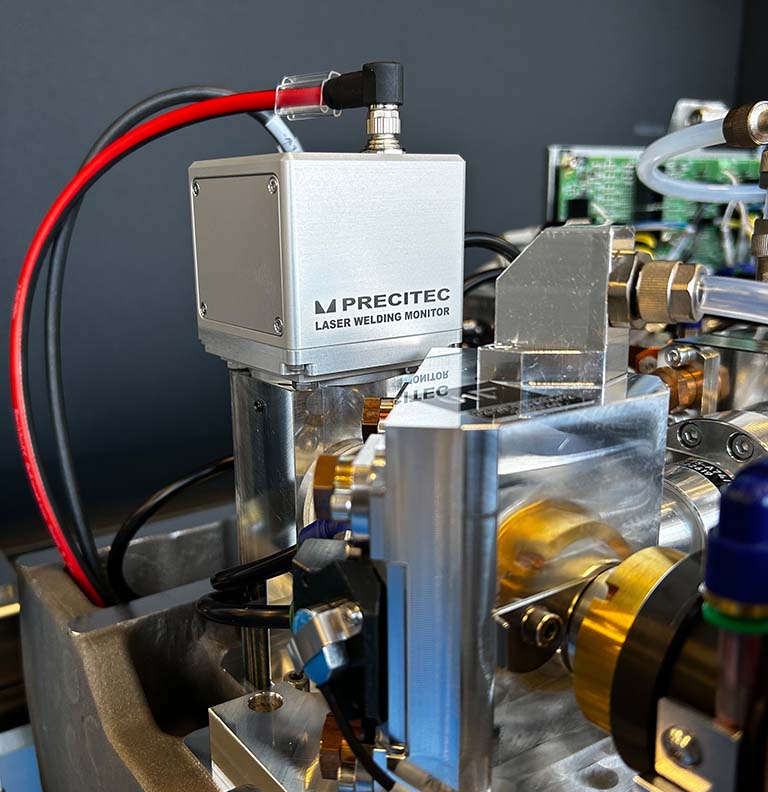
The Laser Welding Monitor LWM AI supports AI-based inline process monitoring during laser welding. Process signals are evaluated in real time, quality deviations are classified, and relevant quality data is made available for mass production.
WeldMaster Scan & Track & Inspect combines seam tracking, beam guidance, and inline inspection for highly dynamic remote laser welding processes. The system is particularly well-suited for automotive applications where component tolerances, short cycle times, and documented quality are critical.
Learn more about the Laser Welding Monitor LWM AI
FAQ: laser welding in the automotive industry
Laser welding enables fast, precise, and automatable welding processes that produce high-quality welds. In the automotive industry, this process is used for body-in-white parts, battery components, hairpins, seat structures, and powertrain components, among other things.
Among the most important advantages are short cycle times, low heat input, high process speed, and consistent quality. As a result, laser welding is particularly well-suited for automated mass production of large quantities.
Process monitoring detects deviations even while the welding process is underway. This allows defects to be assessed more quickly, reduces scrap, and enables quality data to be documented for each component.
AI-powered process monitoring can analyze process signals, classify quality deviations, and predict the physical properties of the weld. This makes the evaluation of laser welding processes more transparent and easier to track.
Typical applications include body panels, aluminum components, battery housings, cell connectors, busbars, hairpins, seat components, and powertrain components. Stable processes, precise seam alignment, and documented quality are crucial.
In automotive mass production, quality data often needs to be documented on a component-by-component basis. Inline process monitoring and AI-supported analysis help to evaluate welding processes in a traceable manner and ensure quality documentation.