
The future of metal processing: How high-power laser cutting is setting new standards
High-power fiber lasers are fundamentally changing thick sheet metal processing. Laser powers of 20, 30 or 40 kW are no longer just future technology, but are increasingly becoming the new standard in many areas of heavy industry. Especially in shipbuilding, steel construction and large machine components, there is a growing demand for fast, precise and economical cutting processes for material thicknesses from 20 to 60 mm and beyond.
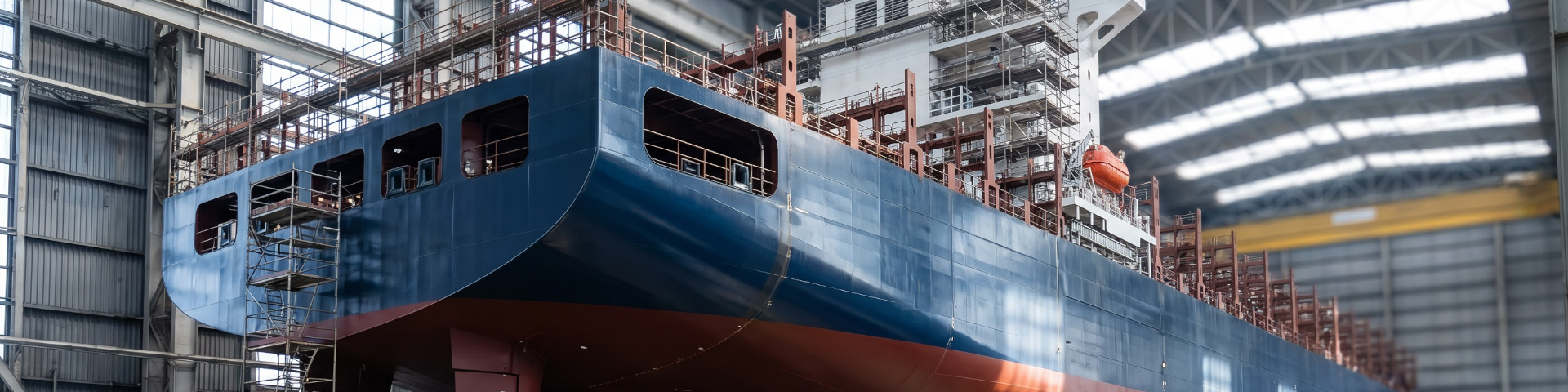
Shipbuilding in particular offers great potential for laser cutting. Large steel plates for hull and deck plates, bulkheads, partitions or reinforcement structures must be cut precisely, reproducibly and with as little rework as possible. Bevel cutting for the preparation of weld edges, for example for K-grooves, is especially relevant. This allows components to be prepared directly for downstream welding processes and reduces manual rework.
Learn more about laser cutting in shipbuilding
Why the cutting head is crucial at high laser powers
The advantage is clear: Higher laser power enables significantly higher cutting speeds, smaller heat-affected zones, and more precise contour control than traditional thermal processes. This reduces the need for post-processing while increasing productivity and component quality. At the same time, falling costs per watt are shifting the economic balance in favor of modern laser cutting systems.
However, as laser power increases, so does technical complexity. Power levels above 20 kW place enormous demands not only on the machine but, above all, on the cutting head. Optics, protective lenses, apertures, cooling systems, focus position, and sensors must operate stably even under high thermal stress. Even the slightest contamination or a thermally induced focus shift can affect cut quality and narrow the process window.
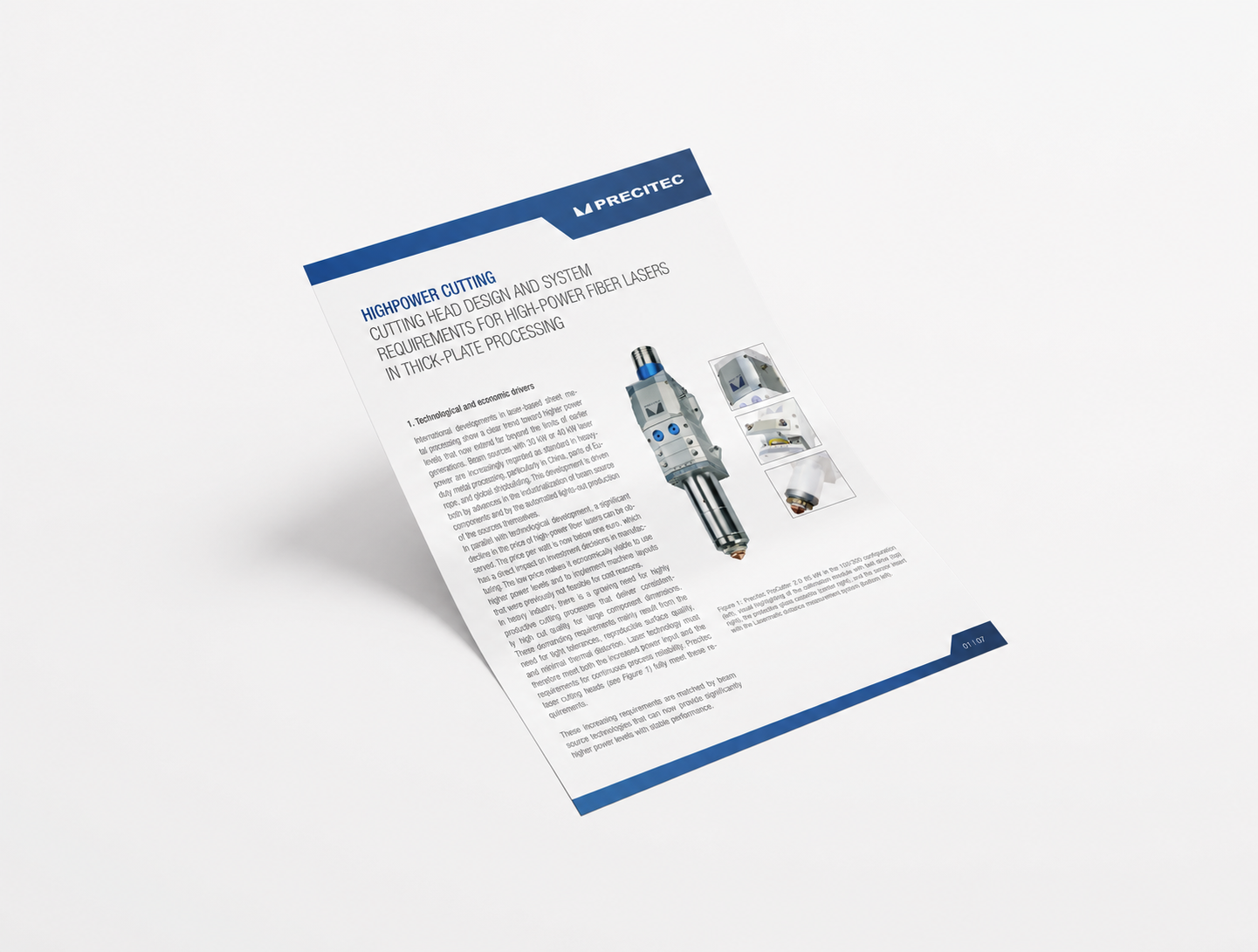
This is precisely where the cutting head becomes the decisive component. The ProCutter 2.0 Plus laser cutting head is designed for these high-power applications and enables reliable beam guidance even at very high laser powers. Robust protective glass cassettes, a high-performance thermal design, and process-oriented sensor technology lay the foundation for stable cutting processes in demanding industrial environments.
Our white paper on this topic
Our whitepaper explains why the cutting head is becoming the key component in modern fiber laser systems – and how intelligent focus compensation, sensor technology and thermal design contribute to stable processes, higher cutting quality and increased productivity.
Focus compensation and distance measurement for consistent cutting quality
BeamTec is a key component. This technology compensates for thermally induced focus shifts during the cutting process and keeps the focus position stable. Especially for long contours and thick materials, this helps ensure consistent cut quality, reduce burr formation, and increase process speed.
Distance measurement also plays a central role. With Lasermatic, Precitec offers a proven sensor solution that precisely monitors the distance between the cutting head and the workpiece. Combined with dynamic focus adjustment and an optical design engineered for high power, this creates a system that reliably meets the demands of modern high-power fiber lasers.
This development demonstrates that, in thick-sheet metal processing, productivity and quality are not determined solely by the available laser power. It is the interplay of the beam source, machine, cutting head, sensor technology, and process control that makes high-power laser cutting industrially feasible. Precitec supplies key technologies for this—from high-power cutting heads and intelligent focus compensation to process-oriented distance measurement.
This makes the cutting head a decisive factor for success in the next generation of metal processing: powerful, precise, and reliable even under extreme process conditions.
High-power cutting in shipbuilding
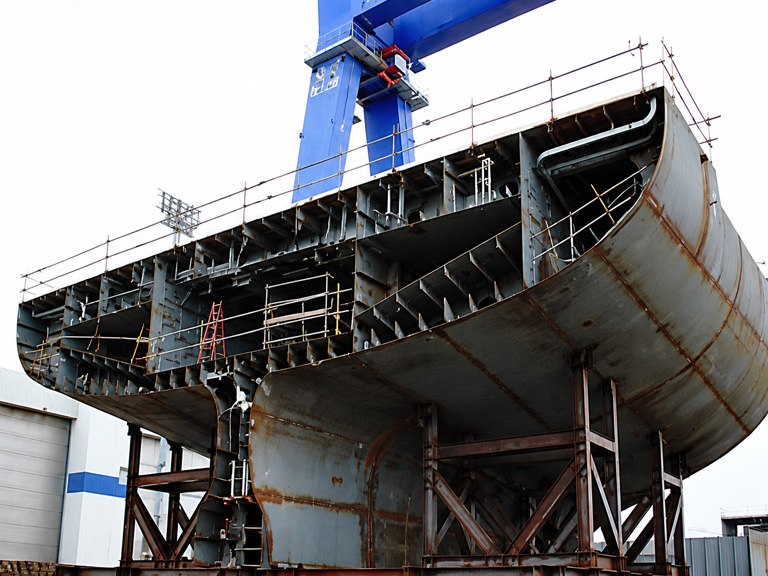
Laser cutting offers great potential, particularly in shipbuilding. Large steel plates for hull and deck panels, bulkheads, partitions, or reinforcing structures must be cut with precision and repeatability, while minimizing the need for post-processing. Material thicknesses typically range from 20 to 60 mm—precisely the range where traditional thermal processes such as plasma or oxy-fuel cutting have been widely used to date.